










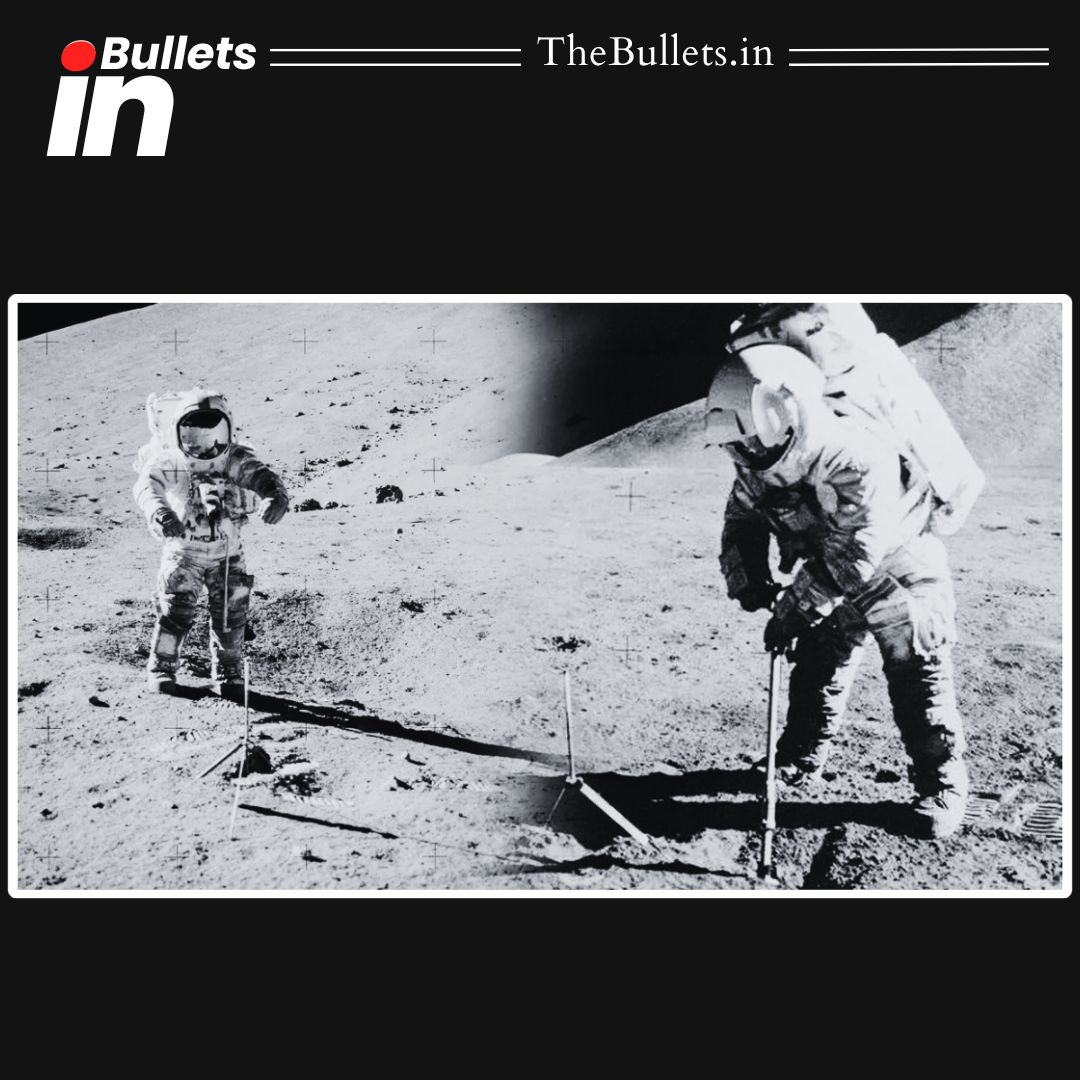


More than five decades after their collection, Apollo moon rock samples are offering fresh insights into the Moon’s mysterious and fluctuating ancient magnetic field.
BulletsIn
- Scientists studying lunar rocks collected during Apollo 11 and Apollo 17 missions discovered evidence of brief but extremely strong magnetic field spikes billions of years ago.
- The research suggests the Moon’s magnetic field was generally weak, but between 3 to 4 billion years ago it intensified dramatically for very short periods.
- These magnetic surges may have lasted less than 5,000 years, possibly even just a few decades, making them unusually brief in geological terms.
- Researchers from the University of Oxford linked high magnetic signals in the rocks to elevated titanium levels formed by ancient volcanic activity.
- Earlier theories suggested the Moon maintained a long-lasting strong magnetic field, but new analysis indicates the field fluctuated significantly over time.
- The Apollo samples were mostly collected from titanium-rich volcanic plains, which may not fully represent the Moon’s overall magnetic history.
- Future missions under NASA’s Artemis program will explore the Moon’s south pole, where ancient rocks and shadowed craters may reveal more details.
- Understanding the Moon’s past magnetic shield is important because magnetic fields help protect planets from harmful cosmic radiation and support planetary habitability.



What do you think?
It is nice to know your opinion. Leave a comment.