











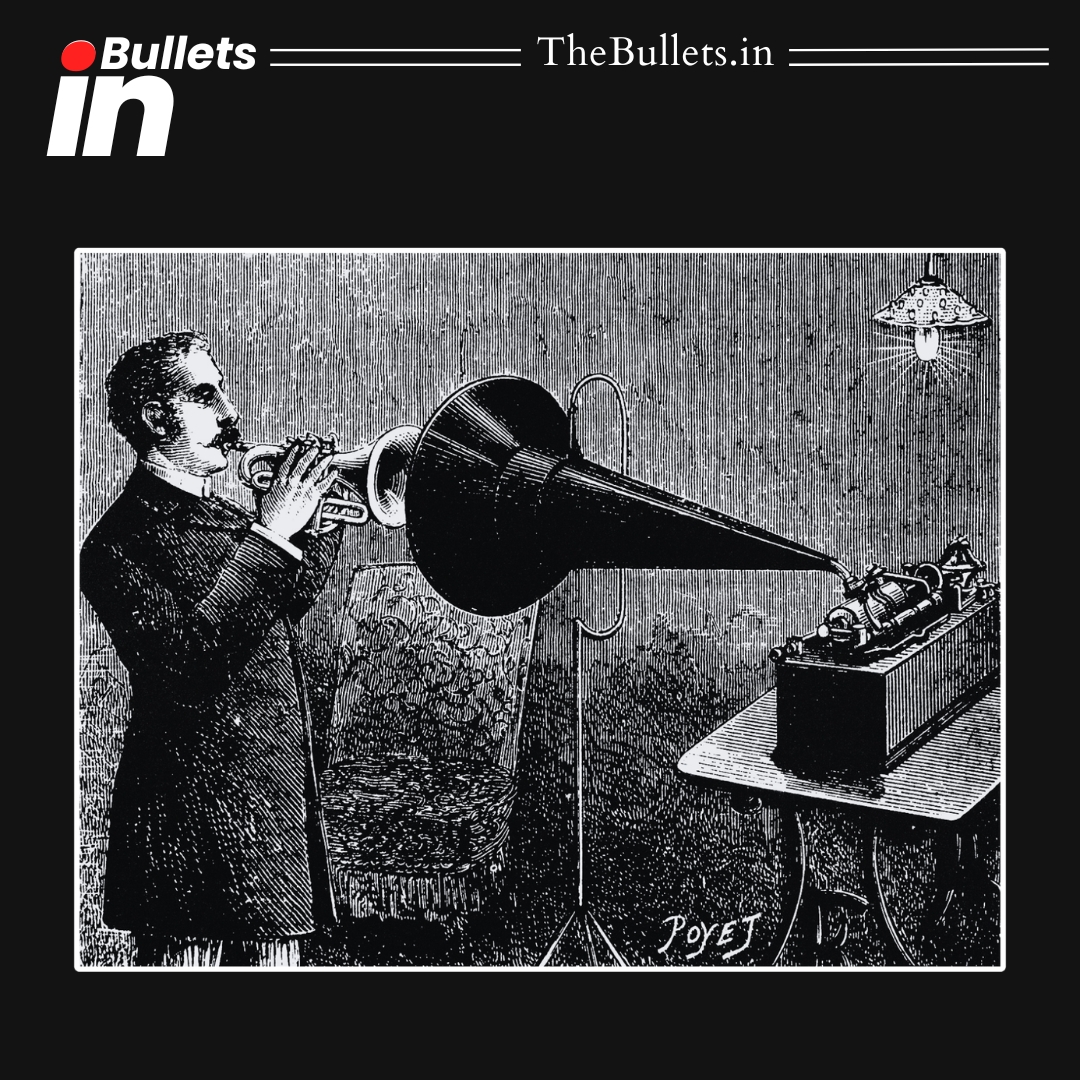


In the late nineteenth century, the recording industry struggled with technology limitations, as phonograph records could not be mass-produced, making each performance nearly one of a kind.
BulletsIn
- In 1888, Thomas A. Edison introduced the Perfected Phonograph, replacing tinfoil with wax cylinders and improving recording clarity and volume.
- Despite growing popularity in public venues and homes, early recordings could not be duplicated efficiently for commercial distribution.
- Each wax cylinder recording had to be performed repeatedly if multiple copies were required, making production slow and labor-intensive.
- Some companies experimented by placing several phonographs before a performer to create multiple recordings simultaneously, often reducing sound consistency.
- The gramophone, redesigned by Eldridge R. Johnson in 1896, allowed disc duplication from a master plate, challenging the phonograph’s dominance.
- Many famous artists hesitated to record due to limited financial incentives and concerns about sound quality in early machines.
- Lesser-known performers embraced recording opportunities, and their voices now provide valuable historical insights into popular musical culture.
- By 1902, gold-moulded cylinders improved duplication, but disc technology soon transformed the music industry into a mass-production model.



What do you think?
It is nice to know your opinion. Leave a comment.